
The Moving Bed Biofilm Reactor (MBBR) is a highly efficient and compact wastewater treatment technology developed in the late 1980s in Norway by Professor Hallvard Ødegaard. Today it is used in more than 50 countries and in projects of all sizes, from small onsite systems to large municipal and industrial treatment plants.
This article summarizes how the MBBR process works, its components, applications, advantages, disadvantages, and how it compares with the activated sludge process.
1. History of the MBBR Technology
The MBBR process was invented to solve two main limitations of the activated sludge process:
- Large footprint requirements,
- Sensitivity to load variations and operational instability.
By introducing free-moving plastic carriers that host biofilm inside reactors, MBBR enabled:
- Higher treatment efficiency,
- Less operator intervention,
- More stable performance under shock loads.
Since then, MBBR has become widely adopted for municipal sewage, industrial wastewater, and retrofitting existing overloaded treatment plants.
2. How the MBBR Process Works (Process Description)
MBBR is a secondary biological treatment technology. Wastewater first passes through primary treatment (screening & primary clarification) to remove settleable solids and some of the BOD.
Then the effluent enters the MBBR reactors, which may be:
- Aerobic (with diffused air),
- Anoxic (with mechanical mixing),
- Anaerobic (without oxygen or mixing, depending on design).
2.1 The Core Idea
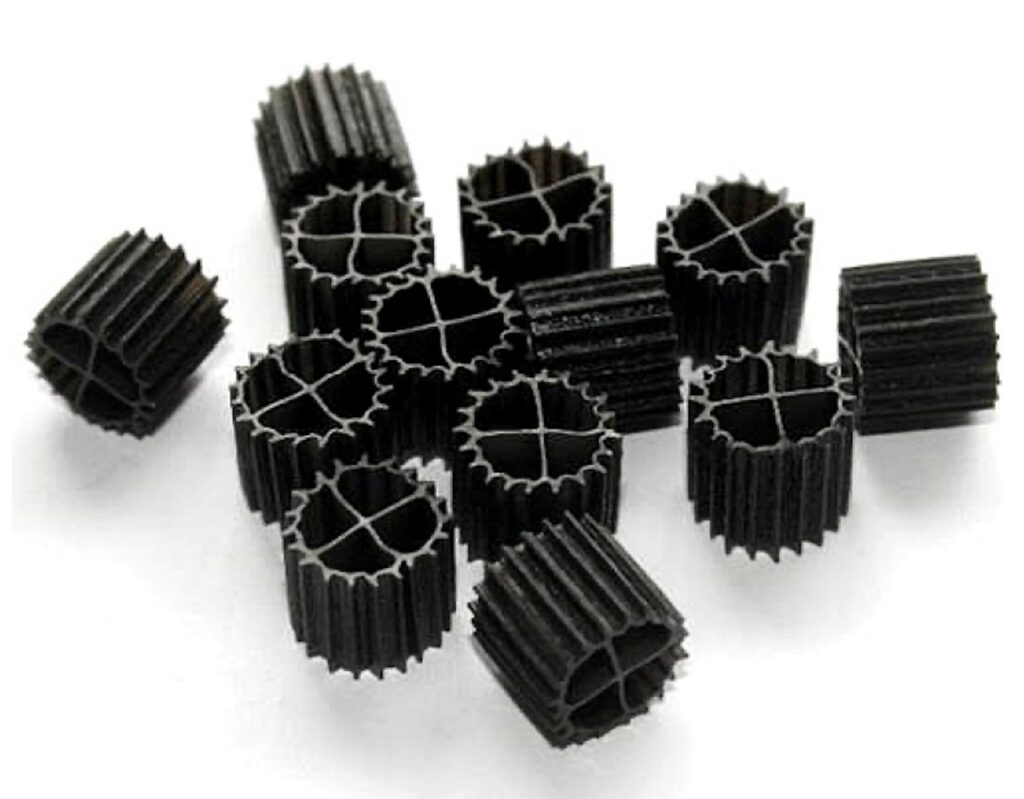
Inside each reactor, thousands of small plastic carriers—called MBBR media or biofilm carriers—continuously move with the flow (either by aeration or by mechanical mixing).
These carriers provide:
- Large protected surface area,
- Ideal conditions for microorganisms to attach and form biofilm,
- High removal rates for BOD, COD, and nitrogen.
2.2 Biofilm Activity
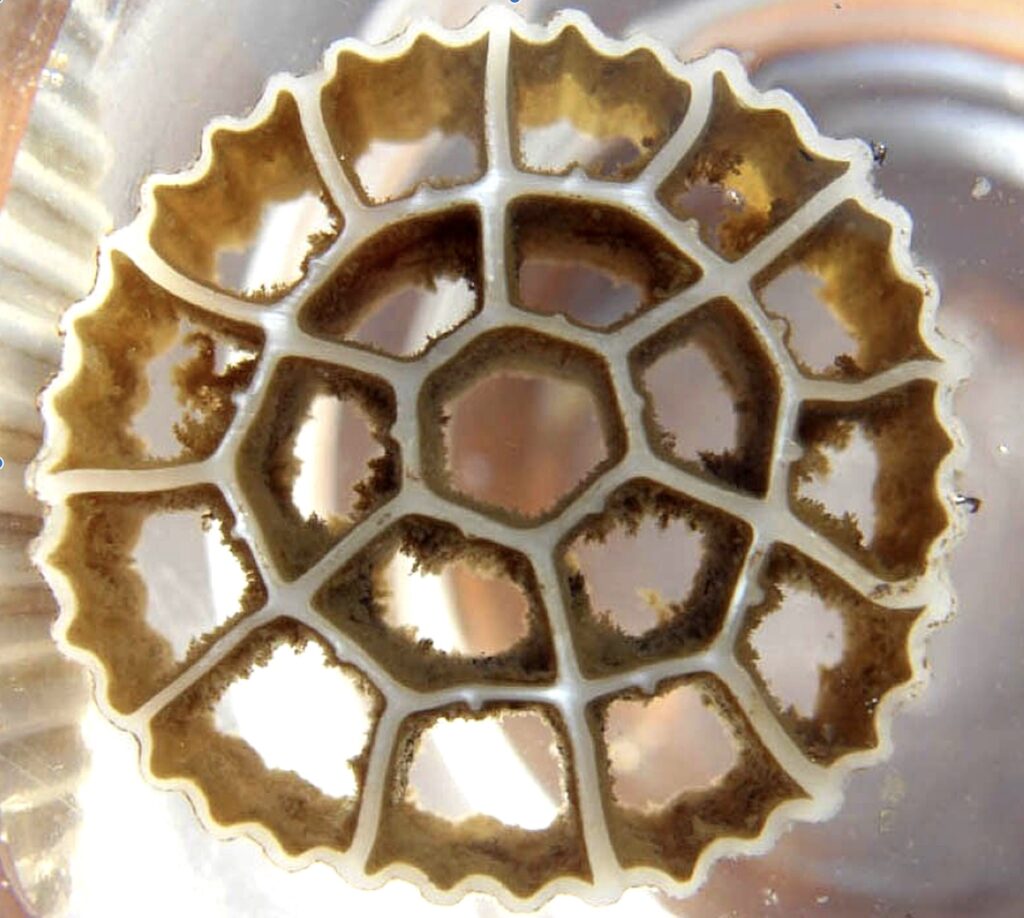
On the inner surfaces of the carriers, microorganisms:
Consume dissolved organic matter (BOD/COD),
Convert ammonia to nitrate (nitrification),
Convert nitrate to nitrogen gas (denitrification) when in anoxic conditions.
As the carriers move, old biofilm shears off naturally, maintaining a healthy and active biomass layer without the need for sludge recycling.
3. MBBR Process Configurations
MBBR can be designed in many configurations depending on treatment goals:
3.1 Single-Stage MBBR (BOD/COD Removal Only)
- One aerated MBBR basin.
- Removes up to 90–95% BOD/COD.
- Followed by a secondary clarifier.
- No return activated sludge (RAS) is required.
3.2 Two-Stage MBBR
- Two aerated reactors in series.
- Higher organic removal and improved nitrification stability.
3.3 Multi-Stage MBBR for Biological Nitrogen Removal
Achieved using three types of reactors:
- Anoxic tank — denitrification (NO₃ → N₂ gas)
- Aerobic tank — BOD removal
- Aerobic tank — nitrification (NH₄ → NO₃)
Two configurations are possible:
A. Pre-Anoxic Denitrification
- Anoxic tank is placed before the aerobic tanks.
- Carbon source for denitrification comes naturally from influent BOD.
- Requires internal nitrate recycle from the nitrification tank to the anoxic tank.
B. Post-Anoxic Denitrification
- Anoxic tank is after the aerobic zones.
- Requires external carbon (e.g., methanol) since influent BOD is already removed.
- No internal recycle needed.
4. Performance and Treatment Efficiency
Well-designed MBBR systems typically achieve:
| Parameter | Removal Efficiency |
|---|---|
| BOD | 90–95% |
| COD | 85–95% |
| Ammonia | 90%+ |
| Total Nitrogen | up to 80–90% (with anoxic zone) |
| Phosphorus | Up to 90% (with chemical dosing) |
5. Key Components of an MBBR System
- Reactor Basin
- Concrete or steel tanks; rectangular or circular.
- MBBR Media (Biofilm Carriers)
- Small HDPE carriers, ±30 mm diameter, high protected surface area.
- Expected lifespan: 15–20 years.
- Media Retention Screens
- Perforated stainless-steel screens preventing carriers from escaping the tank.
- Aeration System (Aerobic Zones)
- Air blowers
- Fine or coarse bubble diffusers
- Mechanical Mixers (Anoxic Zones)
- Maintain carrier movement without oxygen transfer.
- Secondary Clarifier
- Settles suspended biomass.
- No sludge return to the MBBR — only waste sludge disposal.
- Piping, pumps, and control systems
6. Applications of MBBR Technology
6.1 Municipal Sewage Treatment
- On-site and decentralized plants
- Upgrading overloaded activated sludge systems
- Remote or space-limited sites
6.2 Industrial Wastewater
MBBR performs excellently with high-strength or variable-load wastewater from:
- Pulp & paper
- Chemical manufacturing
- Textile industry
- Dairy processing
- Breweries & beverage industries
- Food processing
7. MBBR Media Characteristics
Key features:
- High protected surface area for biofilm growth
- Stable biofilm with high metabolic activity
- Self-sloughing mechanism reduces need for sludge recycling
- Resistant to shock loads
- Long lifespan (15–20 years)
Why is MBBR biomass better than activated sludge?
- Biofilm is more stable
- Higher microbial diversity
- Better nitrifier survival
- Less sensitivity to temperature and pH fluctuations
8. Advantages of the MBBR Process
✔ Very compact footprint (lower HRT and smaller tanks)
✔ High removal efficiency for BOD, COD, NH₄, and TN
✔ Very stable under shock loads
✔ Minimal sludge production
✔ No return activated sludge (RAS)
✔ Lower maintenance needs
✔ Easy expansion — add more carriers to increase capacity
✔ Can be built in concrete, steel, or packaged/container systems
9. Disadvantages of the MBBR Process
✘ Requires trained operators (specialized biological understanding)
✘ Continuous monitoring of DO, mixing, and carrier fill ratio is required
✘ Presence of insects/odors like any biological plant
✘ Diffusers may require periodic cleaning or replacement
Overall, MBBR is significantly simpler to operate than activated sludge, but still requires professional O&M.
10. MBBR vs. Activated Sludge: A Clear Comparison
| Feature | Activated Sludge | MBBR |
|---|---|---|
| Footprint | Large | Small & compact |
| Sludge Production | High | Low |
| Sensitivity to Load Variations | Very sensitive | Highly stable |
| RAS Pumping | Required | Not required |
| Power Consumption | Higher | Lower |
| Expandability | Complex | Easy — add more media |
| Effluent Quality | Good | Excellent |
| Shock Load Tolerance | Poor | Strong |
MBBR is often the preferred choice for:
- Upgrading existing plants
- Industrial wastewater
- Decentralized systems
- Sites with limited space